Real Products
Meet the eko file: a digital reflection of physical products

Many facets of the digital world have standardized, trustworthy data layers. Stripe powers payment systems, Gracenote holds the keys to music and entertainment metadata, and Google is the centralized source for location services.
No such system has been established for e-commerce. Instead, the industry has maintained time-consuming, error-prone systems that make it impossible for manufacturers, brands, and retailers to maintain a single source of truth about each product. Teams are saddled with an outdated, time-consuming item onboarding process that requires manual data entry across dozens of fields.
Even veteran employees are prone to introducing errors that ripple through global supply chains. How are they supposed to know whether a saucepan should be recorded as one piece, including the lid, or two pieces, with the lid separated? Or if the fact that your counter height stools have dimensions for a doll house is correct or a simple misplaced decimal point? It’s no wonder that 30% of major retail catalogs have bad data.
That data, often inaccurate or lacking comprehensive information about your products, is what AI relies on to make product comparisons, generate images, and answer questions about specifications. Machines have become adept at understanding language and imagery, but there remains a major gap in product data that both consumers and LLMs can understand. Over 60% of shoppers use AI to compare brands, models, and prices, and 55% learn about a product and its features using AI, according to data from McKinsey. But if the information consumers are receiving is inaccurate, returns increase and product loyalty evaporates - or even worse, customers will never find the perfect item they are searching for.
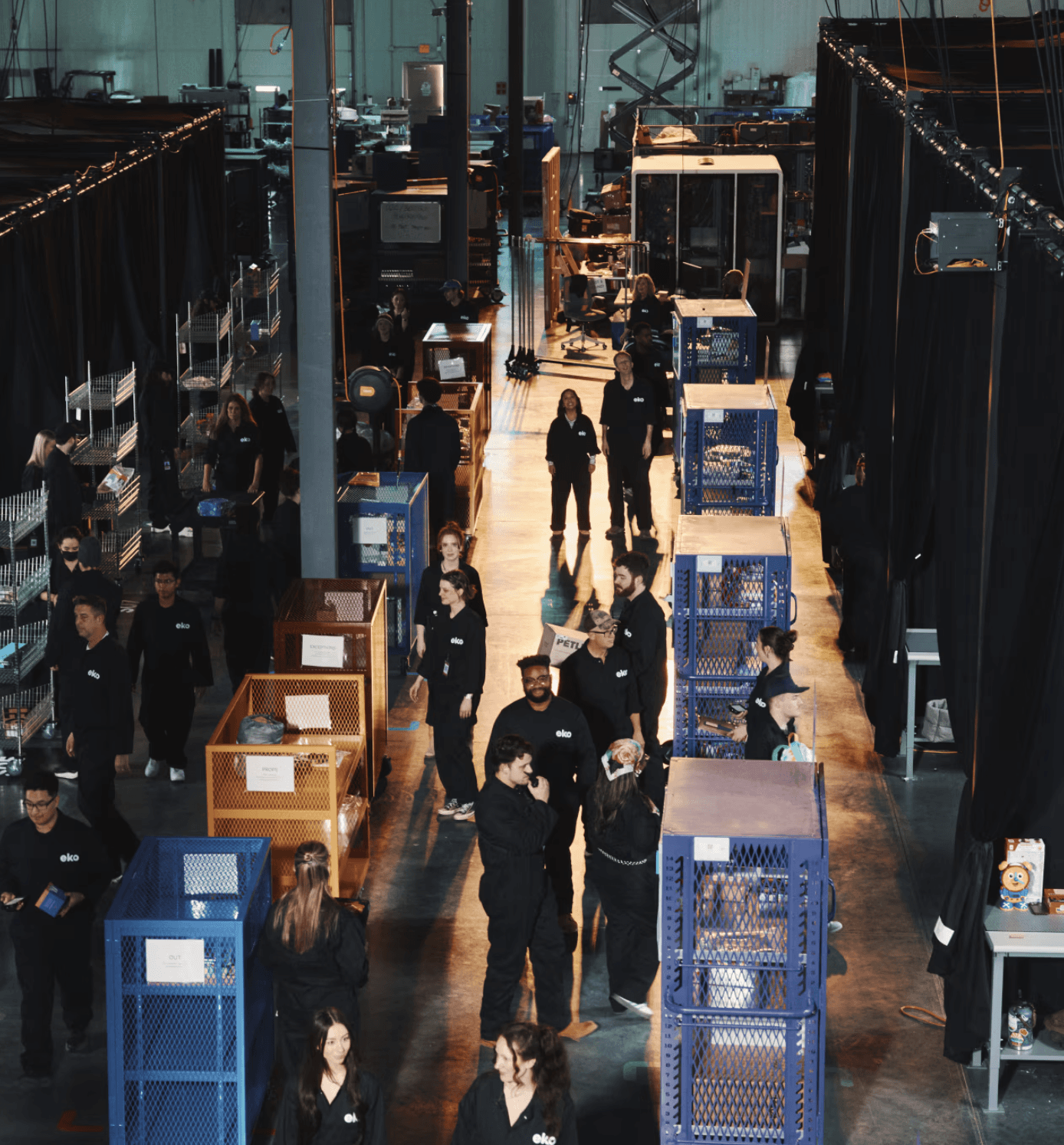
At eko, we’re actively solving this problem. Our hands-on product capture, which uses real people to photograph and record real products, collects everything machines and humans need to know about an item’s parts, materials, and specifications. The process relies on humans to stage products and demonstrate how they work and robots to accurately scan dimensions, product text, and visuals. That centralized, accurate information is then stored in an eko file, which serves as the translation layer between physical goods and machines.
The eko file unlocks capabilities like automated marketing content, human-led demonstrations, and lifestyle imagery without compromising on quality or accuracy. It also takes the friction out of labor-intensive e-commerce processes with zero-step item setup and trues product catalog data that matches your item exactly.
Perhaps most importantly, the eko file provides machines with good data to create next-generation shopping experiences. Your customers are already relying on AI for product search and discovery. Without comprehensive, accurate item information, you risk lost sales, lost customers, and lost visibility in the agentic commerce future.
Interested in learning more? Read about our solutions across item setup, product catalog data, and brand asset libraries.